

Where they live
Red squirrels are at home in all types of woodland. They can even be spotted in parks and gardens, but they like mixed conifer forests best.
What they eat
Red squirrels love seeds, particularly from pine, spruce and larch cones. It’s thought a single squirrel can eat the seeds from up to 20,000 cones in a year.
They also eat:
- nuts
- fungi
- shoots and fruits of shrubs and trees
- sometimes birds' eggs
A red squirrel can tell if a nut is good or bad just by shaking it in its paws. Look out for fungi placed high up on tree branches in autumn. Squirrels leave them out to dry before hiding them away for the winter, along with stores of seeds and nuts.
Did you know
Traditionally, red squirrels were known just as 'feòrag.' 'Ruadh’ (meaning rusty brown) was added when invasive grey squirrels were introduced to the country.
How to see them in the wild
Where you can see them
You might see red squirrels in any Scottish wood, but head for the pine forests of the Highlands and Dumfries and Galloway for the best chance.
There are family-friendly trails to squirrel-watching hides at The Lodge Forest Visitor Centre near Aberfoyle and at Kirroughtree near Newton Stewart. Spot roe deer and plenty of colourful woodland birds there as well.
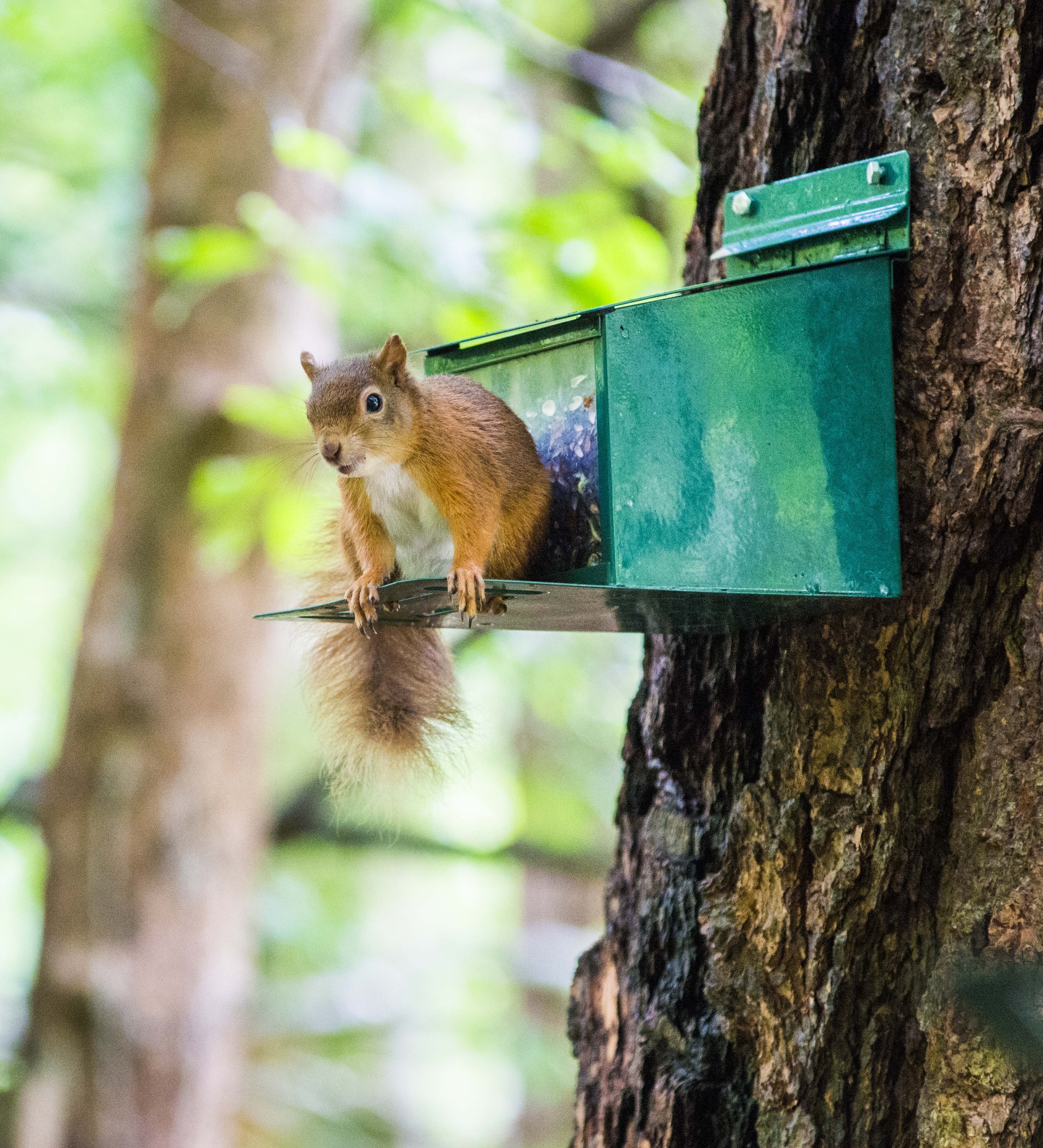
Watch red squirrels bustling among the trees at their feeding station at Glen Righ, then cross the water at Corran Ferry and head for spectacular Garbh Eilean wildlife hide on the shore of Loch Sunart. Here you might also see basking common seals and herons and, if you’re lucky, otters. In summer ospreys and sea eagles visit the loch.
Spot red squirrels enjoying their favourite snack of Scots pine seeds along the wooded trails at Glenmore Forest Park in the heart of the Cairngorms National Park and in the ancient Caledonian pine forest at beautiful Glen Affric. Watch for red and roe deer and the rare and elusive pine marten there too.
Take a peek at the livestream
See if you can spot the red squirrels at The Lodge Forest Visitor Centre on our live webcam.
Please note, the webcam is up and running but weather, terrain and wear and tear can all affect the feed. The main challenge is broadband speed, so please bear with us if footage is intermittent.
Visit The Lodge Forest Visitor Centre page
When you can see them
You can see red squirrels all year round because they don’t hibernate. You may hear the scratching sound of a red squirrel’s claws in the branches before you see it. It might chatter crossly or even stamp its feet if you surprise it.
Red squirrels are active in the daytime but, like us, don’t really like being out in bad weather. They also enjoy an afternoon nap, especially when it’s hot. From January into early spring watch for red squirrels racing through the trees and spiralling up and down the trunks. This is mating time, and the males are chasing after the females.
What to look out for
Despite their name, red squirrels aren’t always bright rusty red. Some are pale brown, grey or almost black and their tails often go quite blond in summer. However, unlike grey squirrels, reds always have distinctive hairy tufts on their ears.
They have large, untidy dreys (nests) high up in the trees. They leave scratch marks on tree bark and pinecones, chewed like apple cores, on the forest floor.
They’re smaller and daintier than grey squirrels with pronounced ear tufts. Red squirrels’ bodies are about as long as an adult’s hand and their tails are the same length again.
Saving Scotland's Red Squirrels
As part of our efforts for this species, we fund the work of Saving Scotland’s Red Squirrels.
Learn more about Saving Scotland's Red Squirrels
Red squirrel species licence
Sometimes our forestry operations require us to work in areas known to be home to red squirrels. While this is normally not allowed, a species-specific licence from Scotland's national wildlife body, NatureScot, allows us to continue working.
Visit our licensing page to find out more about how and when we use this function.